

Free domestic shipping on all orders $29.99 & up

The Insole Store now accepts HSA/FSA payments. Learn more

Rewards members save on every purchase. Join for free today!

BOGO15DEAL

Low Arch Insoles

You're currently browsing our entire selection of low arch insoles. Use the product filters below to narrow your selection, try our Insole Finder for a quick recommendation, or contact us if you have any questions.


Top Recommended Low Arch Insoles

Powerstep Pinnacle Low Insoles

Description:
Overview The PowerStep Pinnacle Low uses the same base shape as the customer-favorite Pinnacle insole but lowers the height of the arch support to 20mm, making it more ideal for providing support for those with low arches and flat feet. This insole will provide you with semi-rigid arch support an... Read more

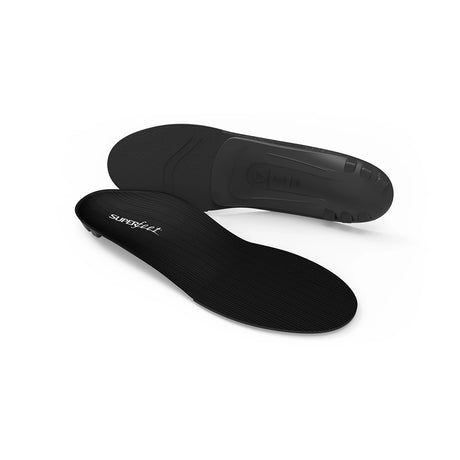
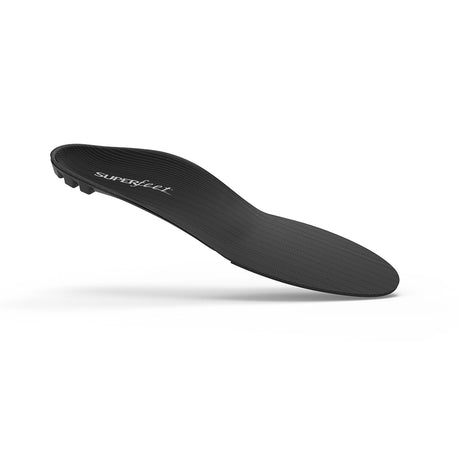
Superfeet Black All-Purpose Support Low Arch Insoles

Description:
Overview The Superfeet Black All-Purpose Support Low Arch Insoles are a classic style and long-time favorite of many users seeking extremely firm foot & arch support. Featuring an extra-firm low/medium-height arch support, a deep heel cup, and a moderate amount of dense cushioning throughout,... Read more

Currex SupportSTP Insoles

Description:
Overview The Currex SupportSTP Insoles are Currex's answer to addressing foot fatigue, pain, and discomfort that arises from everyday activities such as walking and standing. Designed to be your everyday-wear insole, the SupportSTP insole offers semi-rigid arch support, heel and ball-of-foot padd... Read more

Sof Sole FIT Insoles

Description:
Product Details Overview: The Sof Sole FIT Insoles are a full-length, rigid arch insole that is arch height specific. They are designed to with a reinforced support plate for the arch and deep heel cup for the heel to promote excellent anatomical alignment.  Product Features: Rigid arch support ... Read more

Shop All Low Arch Insoles


About Low Arch Insoles

What determines whether or not an arch support insole is low-arched?

We define “high arch” as an arch height that measures between 15-21mm in height from the base of the insole to the peak of the arch support. Insoles with arch heights in this range tend to be the most comfortable for those with low-arched feet.

Note: It’s not important to know the exact height of your own foot arch. Those with low-arched feet can almost always comfortably wear any insole with an arch height of 15-21mm.

A chart showing the footprint of a low-arched foot vs. medium-arched foot vs. high-arched foot
A low-arched foot will have a footprint most similar to the one shown on the left, while a high-arched foot will have a footprint most similar to the one shown on the right.

How do I know if I have low-arched feet?

There’s a simple way to determine your foot arch type at home, called the “wet foot test.” All you do is get your foot wet, step on a flat surface where you’ll be able to see your footprint, and then compare the footprint shape with the chart below. Whichever shape most closely matches your own footprint is the arch height you naturally have (the more your midfoot contacts the ground, the lower your arches).

Those with low-arched feet should see where the majority of their foot touches the ground (the arch, which shows as a vacant space in the footprint, would be minor). When you take a step, only the majority of your midfoot contacts the ground, leaving a distinctive “wide” footprint shape.

Are low arches the same as flat feet or fallen arches?

No. “Low arches” or “low-arched feet” simply describes an individual whose natural foot arch height is slightly lower than average. People with low-arched feet can have perfectly healthy feet; all that “low arches” describes is the height of the foot arch compared to “average.”

Flat feet and fallen arches, on the other hand, both describe foot conditions wherein the muscles throughout the arch of the foot become tired, sore, or injured, allowing the arch of the foot to collapse.

So: “Low arches” simply describes the relative height of one’s foot arch, while “fallen arches” and “flat feet” describe foot conditions relating to weakening of the midfoot muscles.

Compare /4

Loading...