Why Do My Feet Hurt at the End of the Day?
By the time you finally kick off your shoes at night, your feet can feel like they've run a marathon, even if you spent the day behind a desk or...
Read moreWe're proud to be a top-rated store!



10 Seconds 3810 Ultra Arch Support Insoles


Superfeet Everyday Casual Support Insoles


Superfeet Everyday Casual Pain Relief Insoles


Superfeet Sport Ultralight Insole


PowerStep Morton's Toe Insoles
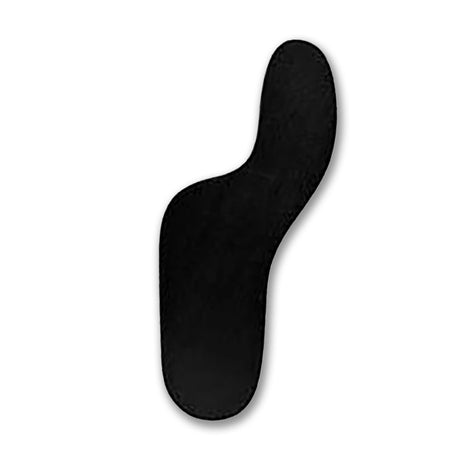
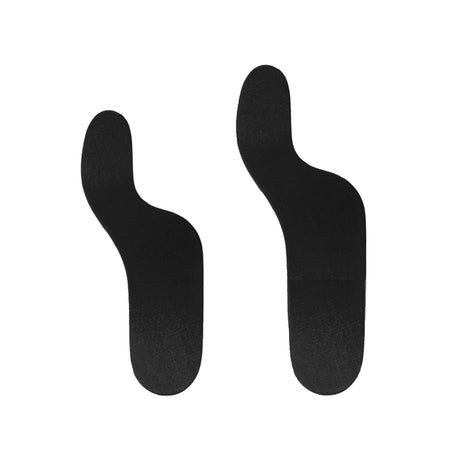
OC9 Morton's Toe Carbon Fiber Contoured Insole

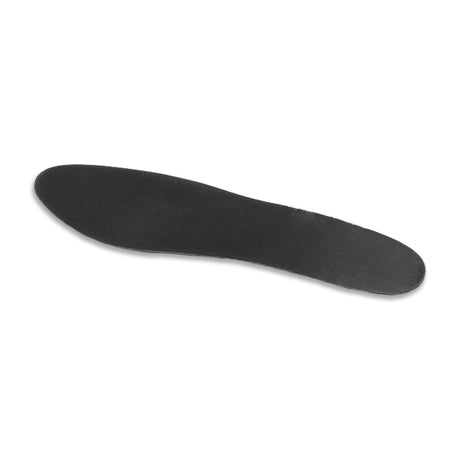
OC9 Hallux Rigidus & Limitus Contoured Insole

10 Seconds 3720 Arch Stability Insoles


Spenco RX Thinsole 3/4-Length Orthotic Arch Supports


Birkenstock Birko Active Arch Support Insoles

OC9 Hallux Rigidus & Limitus Flat Insole


Sorbothane Ultra Graphite Medium Arch Support Insoles


Need help? Want a personalized recommendation?
Our team can help! Contact us or use our Insole Selector Quiz!
Carbon fiber and composite insoles occupy a specific high-performance niche in the insole category: extremely rigid, extremely lightweight, and extremely thin. Carbon fiber is made from woven carbon filament strands bonded with resin, producing a material that is stronger than steel by weight and stiffer than any foam or plastic alternative. Composite insoles use combinations of carbon fiber with other rigid materials, achieving similar properties. The result in an insole is a plate that provides maximum structural support with minimal added thickness or weight, making these materials the choice for applications where both rigidity and profile are critical. Cycling, skiing, hockey, and performance running are the primary use cases, alongside specific medical applications like hallux rigidus management.
Carbon fiber insoles achieve structural rigidity that foam and plastic alternatives can't approach at the same thickness. In applications where the shoe volume is extremely limited, such as cycling shoes, hockey skates, and ski boots, a carbon fiber plate provides rigid arch support and forefoot stiffening within a profile that wouldn't accommodate a comparable plastic or composite structure. For performance-oriented footwear where millimeters of profile matter, carbon fiber is the only material that delivers this combination of rigidity and thinness.
In cycling, the stiff forefoot plate of a carbon fiber insole eliminates energy loss through forefoot flex during the pedal stroke. Every watt of force applied to the pedal is transmitted through the rigid plate rather than being partially absorbed by insole flex. This same forefoot stiffening is valuable for hallux rigidus and turf toe management, where limiting first big toe joint extension is the primary therapeutic goal. A carbon fiber forefoot plate is the most effective non-surgical intervention for restricting this motion.
Carbon fiber insoles are significantly lighter than foam, gel, or plastic alternatives of equivalent structural rigidity. In activity categories where every gram of weight matters, such as competitive cycling or long-distance running, a carbon fiber insole adds minimal weight while providing maximum support. This weight advantage is less relevant in everyday footwear applications but becomes meaningful at higher performance levels.
Unlike foam and gel insoles that compress and degrade over months of use, carbon fiber plates maintain their structural properties virtually indefinitely. The rigid carbon structure doesn't compress, deform, or absorb moisture, and carbon fiber insoles typically outlast multiple pairs of the shoes they're used in. The initial cost is higher than foam alternatives, but the durability makes the effective cost per use significantly lower over time.
Pure carbon fiber plates without a cushioning top layer can feel hard underfoot for everyday use, as they provide no shock absorption. Most carbon fiber insoles designed for everyday or mixed use include a cushioning top cover that adds comfort without significantly increasing profile. For purely performance applications like cycling or skiing where impact absorption isn't a concern, a bare carbon plate is appropriate. For walking or standing use, a carbon fiber base with a foam or gel top cover combines the rigidity benefits with adequate cushioning.
Generally no. Carbon fiber plates can't be trimmed with standard scissors or a utility knife the way foam insoles can. Most carbon fiber insoles are available in specific sizes that should fit closely without trimming. Some composite insoles with softer edge materials can be trimmed, but this should be done with appropriate tools and care. The inability to trim is a practical consideration when sizing: when in doubt between sizes, the smaller size is usually the better choice for a snug fit rather than a larger plate that won't trim down.
Our team is always happy to lend a hand! If you need any help at all, contact us! We can assist with answering product questions, making a product recommendation, helping to place your order, or providing any other assistance you may need.
There don't appear to be any related articles at the moment, but we update our blog with new content regularly. In the meantime, check out these recent posts!