

Free domestic shipping on all orders $29.95 & up

The Insole Store now accepts HSA/FSA payments. Learn more

Rewards members save on every purchase. Join for free today!

We're proud to be a top-rated store!
Memorial Day savings have arrived!Save 10% on all orders sitewideSave 15% instead on orders $79.95+

Diabetes, Neuropathy, and Sensitive Feet

You're currently browsing our entire selection of products suitable for Diabetes, Neuropathy, and Sensitive Feet. Use the product filters below to narrow your selection, or contact us if you have any questions or for a recommendation. Thank you for shopping with us!


Best for Diabetes, Neuropathy, and Sensitive Feet

Spenco Medics Diabetic Insoles top and bottom
Flexible Arch Support

Spenco Medics Diabetic+ Insoles

Description:
Overview The Spenco Medics Diabetic+ Insoles feature a Plastazote foam top layer that makes it ideal for those with blisters, diabetes, arthritis, sensitive feet, or who otherwise would like extra-plush, foot-friendly cushioning. The insole features fully flexible, cushioned arch support along wi... Read more
New Balance Therapeutic Cushion Insoles
Semi-Rigid Arch Support

New Balance Therapeutic Cushion Insoles

Description:
Product Details Overview: The New Balance Therapeutic Cushion Insoles are a semi-rigid orthotic arch support insole that has an extra soft foam top cover that conforms to your feet. They feature a dual layer of cushioning to help relieve pressure, a heel cushion that is designed to help reduce sh... Read more
10 Seconds 3020 Pressure Relief Insoles
No Arch Support

10 Seconds 3020 Pressure Relief Neutral Insoles

Description:
Overview The 10 Seconds 3020 Pressure Relief Insoles are an extra-plush cushioned insole designed to provide maximum cushioning and pressure relief with a fully-flexible, low-profile arch support. Featuring Plastazote foam across the entire top, this insole is a popular choice among those sufferi... Read more
10 Seconds 3030 Pressure Relief Insoles with Met Pad
Full Midfoot & Metatarsal Support

10 Seconds 3030 Pressure Relief Insoles with Metatarsal Support

Description:
Overview The 10 Seconds 3030 Pressure Relief Insoles with Metatarsal Support are one of the most popular insole options for those seeking extra-plush all-over cushioning plus additional arch & metatarsal support. These insoles will provide flexible arch support, with the addition of a thickly... Read more

Shop All for Diabetes, Neuropathy, and Sensitive Feet


About Diabetes, Neuropathy, and Sensitive Feet

Peripheral neuropathy — nerve damage most commonly associated with diabetes — affects the feet in two distinct ways depending on the individual. For some, it produces heightened sensitivity or burning pain, where soft materials that most people would find comfortable instead feel irritating or even painful against the skin. For others, it reduces or eliminates sensation in the feet, which creates a different but equally serious problem: pressure sores, blisters, and minor injuries can develop without the person noticing, increasing the risk of complications if left unaddressed. In both cases, standard footwear and insoles may not provide adequate protection.

Products designed for diabetic and sensitive feet prioritize materials that minimize friction, pressure, and irritation at the skin surface. Plastazote foam is the most widely used material in this category — it is extremely soft, molds to the foot's shape under body heat, and creates an even pressure distribution that reduces localized stress on vulnerable areas. For people with reduced sensation especially, the protective function of the right insole and sock combination can be as important as any comfort benefit.

How to Choose

Material softness and conformability. Standard foam insoles are not appropriate for diabetic or highly sensitive feet. Look specifically for Plastazote, Poron, or similarly soft medical-grade materials that mold to the foot's contours and create an even contact surface. These materials distribute pressure more uniformly and minimize the localized hot spots that can cause skin breakdown.

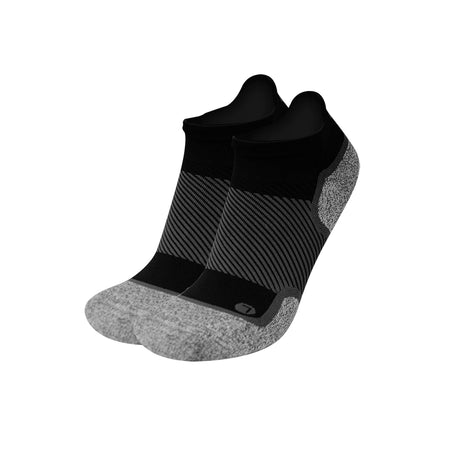
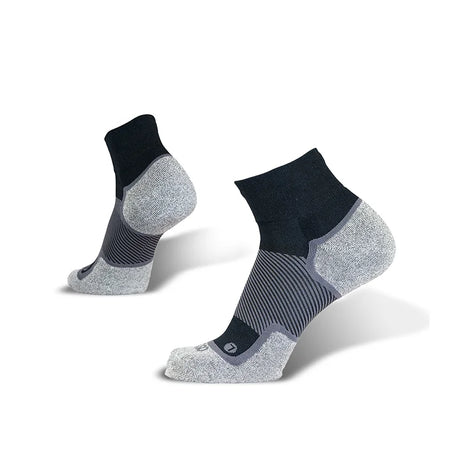
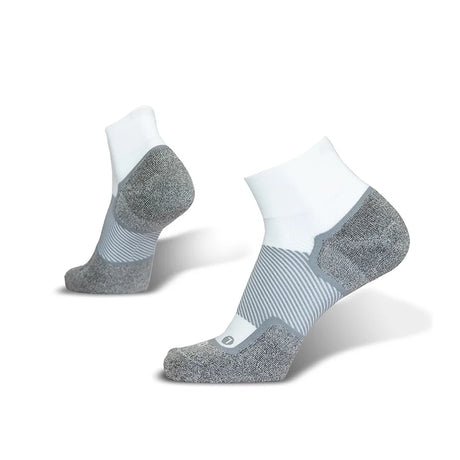
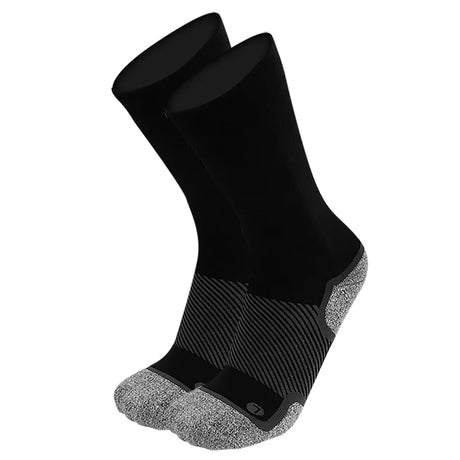
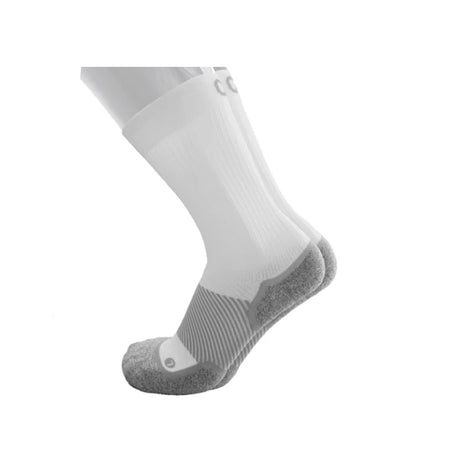
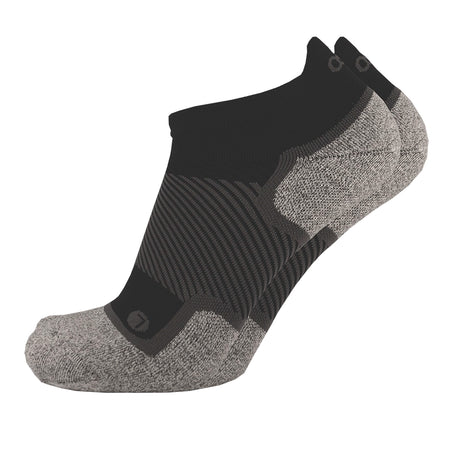
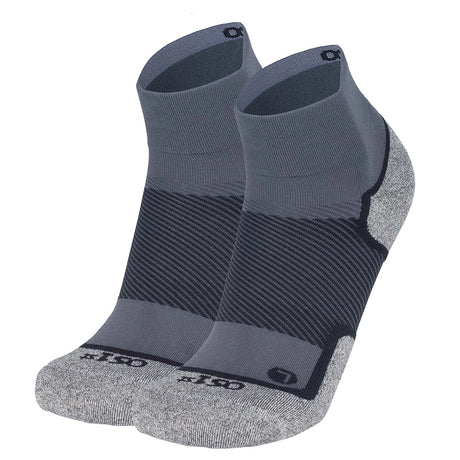
Seamless construction in socks. Seams, thick toe closures, and elasticized cuffs that create pressure bands are all potential sources of skin irritation in sensitive feet. Diabetic socks are designed specifically to eliminate these features — they are seamless or flat-knit, non-binding at the top, and made from moisture-wicking fibers that keep the foot dry and reduce maceration risk.

Moisture management. Damp skin is significantly more vulnerable to friction and skin breakdown than dry skin. Both insoles and socks for this category should prioritize moisture-wicking properties to keep the foot surface dry throughout the day.

Fit and volume. A too-tight shoe with a thick insole can create new pressure points in sensitive feet. Make sure any insole you add doesn't reduce shoe volume to the point of constriction — diabetic footwear is often available in extra-depth widths specifically to accommodate therapeutic insoles.

Extra-depth or diabetic footwear. For people with significant neuropathy or foot deformity, extra-depth shoes provide the necessary interior volume to accommodate protective insoles without compressing the foot. These are included in this collection and are worth considering as part of a complete solution.

How Different Products Help with Diabetes, Neuropathy, and Sensitive Feet

Diabetic Insoles

Diabetic insoles are constructed from materials — most commonly Plastazote — that are softer and more conforming than standard foam. Under the warmth of the foot, Plastazote molds to the foot's individual contours, creating a custom-like fit that distributes pressure evenly across the entire plantar surface. This even distribution reduces the peak pressure points that can cause skin breakdown in numb feet, and minimizes the abrasive contact that produces pain in hypersensitive ones. Many diabetic insoles also layer Plastazote over a supportive base to provide arch support alongside cushioning. If you're currently using a standard foam insole in shoes worn all day, switching to a Plastazote-based diabetic insole is one of the most impactful single changes you can make for foot protection.

Diabetic Socks

Diabetic socks address the skin-level contact environment that insoles alone cannot. Key features include seamless or flat-knit toe closures that eliminate the ridge a standard sock seam creates against the toes, non-binding tops that don't constrict circulation at the calf or ankle, and moisture-wicking fiber blends that keep the skin dry throughout the day. For people with reduced sensation, seamless construction is particularly important because a standard sock seam can cause a blister or pressure sore without ever producing the discomfort that would normally prompt a shoe change. Diabetic socks are not simply thicker socks — the design differences are functional and matter most in everyday wear.

Footwear

Extra-depth footwear provides the interior volume needed to accommodate protective insoles without compressing the foot. Standard shoes are often not wide or deep enough to fit a therapeutic insole properly alongside a diabetic foot — particularly if there is any swelling, deformity, or custom orthotics involved. Extra-depth shoes also tend to have softer interior linings, rounder toe boxes, and reduced seam contact, all of which reduce irritation. For people with significant neuropathy or a history of foot wounds, appropriate footwear is part of the protective system, not just an accessory. Insoles and socks provide the most benefit when worn inside footwear that doesn't create new pressure points on its own.

Frequently Asked Questions

What makes a diabetic insole different from a regular cushioned insole?

The primary difference is material and construction. Diabetic insoles use ultra-soft, conforming materials — most commonly Plastazote — that mold to the shape of the individual foot and distribute pressure evenly across the entire contact surface. Standard cushioned insoles, even soft ones, have a uniform surface that creates localized pressure points wherever the foot's bony prominences make contact. For diabetic or sensitive feet, that difference in pressure distribution is clinically significant.

Do I need both diabetic insoles and diabetic socks, or will one cover it?

They address different layers of contact. Insoles manage pressure between the foot and the shoe floor. Socks manage friction and moisture between the foot and the insole surface. For people with significant neuropathy or sensitivity, using both together provides more complete protection than either alone. If you're choosing just one to start, insoles tend to have a larger impact on pressure management, while socks make the most difference for friction-related irritation and moisture control.

Can I use a diabetic insole in my existing shoes?

Often yes, but it depends on the shoe's interior volume. Diabetic insoles have some thickness, and adding one to a snug shoe can create compression. If your current shoes have removable factory insoles, replacing those with a diabetic insole is the cleanest approach. If the shoes don't have removable insoles or fit snugly already, an extra-depth shoe may be a better starting point so the insole has room to work without constricting the foot.

Are diabetic socks only for people with diabetes?

No — the design features of diabetic socks (seamless construction, non-binding tops, moisture management) are beneficial for anyone with sensitive skin, poor circulation, or foot conditions that make standard sock seams uncomfortable. They're particularly useful for people who spend long hours on their feet and are prone to blisters or skin irritation regardless of whether they have diabetes.

What should I look for in diabetic footwear?

Extra depth to accommodate protective insoles without compressing the foot, a wide and rounded toe box that doesn't constrict the toes, a soft interior lining with minimal seams, and adjustable closures (laces or hook-and-loop) that allow fit customization to accommodate swelling. For people with foot deformities or a history of ulcers, it's worth looking specifically for shoes labeled as therapeutic depth or accommodative depth.

Need More Info? Not Sure Where to Start?

You can find our top recommendations at the top of the page. These recommendations are selected based on our overall most-recommended products for Diabetes, Neuropathy, and Sensitive Feet and are an excellent place to start if you're not sure which products to try first.

Need more help? Our team is here! Simply contact us and we'd be happy to answer any questions you may have or provide you with some product recommendations personalized to your needs!

Compare /4

Loading...
Memorial Day Savings Save 10% on this item. Save 15% on orders $79.95+
Free & Fast Shipping Ships free within 24 hours of placing your order.
Wear-Test Guarantee Buy it & try it. Don't love it? We'll exchange it!
Earn Rewards Points Earn rewards points automatically when you purchase!
Quick Shipping Ships within 24 hours & free for orders $29.95+
Clearance Item 25% discount applied at checkout. All sales final on Clearance merchandise.
Closeout Item Up to 60% discount reflected in current price. All sales final on Closeout items.
Top-Rated Store
Authorized Retail Partner
Secure Checkout
Dedicated Customer Support
Quick Shipping
Easy Returns & Exchanges