

How Walking Affects Your Feet (And What to Do About It)
Walking is one of the most natural and widely recommended forms of exercise — but that doesn't mean your feet are immune to the wear and tear it can cause....
Read moreWe're proud to be a top-rated store!
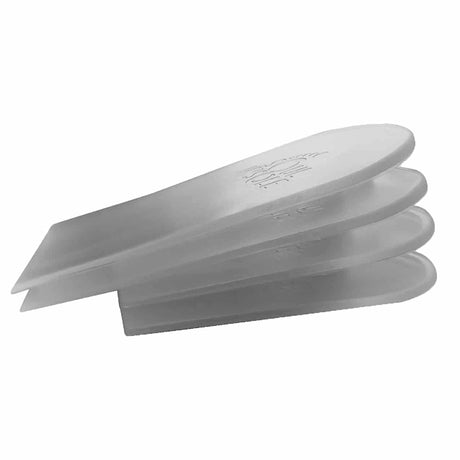
Soul Insole Heel Lifts / Gel Heel Cushions
PowerStep Adjustable Heel Lift
OS1st AF7 Ankle Bracing Sleeve
OS1st FS6 Performance Foot Sleeves
Pedag Perfect Leather Heel Cushion
Spenco Full-Length Orthotic Arch Supports
Spenco 3/4-Length Orthotic Arch Supports
PowerStep Ultrastretch Night Sock
OS1st DS6 Night Time PF Treatment Sleeve
OS1st FS4+ Compression Bracing Socks
Spenco RX Thinsole 3/4-Length Orthotic Arch Supports

Need help? Want a personalized recommendation?
Our team can help! Contact us or use our Insole Selector Quiz!
The Achilles tendon is the largest tendon in the body, connecting the calf muscles to the heel bone and transmitting the force needed to push off the ground with every step. Achilles tendinitis occurs when that tendon becomes inflamed from repetitive strain, producing pain and stiffness along the back of the heel and lower leg. It most commonly develops in runners and athletes who increase their training load too quickly, but it also affects people who spend long hours on their feet or who have tight calf muscles. The pain is typically worst first thing in the morning or after periods of rest, easing up once the tendon warms up, and returning with prolonged activity.
The primary main physical causes to Achilles tendinitis are excessive strain on the tendon and poor shock absorption at heel strike. Insoles address both by correcting the foot's alignment, elevating the heel to reduce tension on the tendon, and cushioning the impact that travels through the heel with each step.
A heel lift or elevated heel zone in an insole reduces the angle at which the Achilles tendon is stretched during standing and walking. By slightly raising the heel, the insole shortens the effective length the tendon needs to reach with each step, reducing the pulling force on inflamed tissue. This is one of the most direct insole-based interventions for Achilles tendinitis and is often recommended as part of non-surgical treatment. Even a modest heel elevation can produce a meaningful reduction in tendon strain over the course of a day.
Overpronation, where the foot rolls inward excessively during the walking stride, places additional rotational stress on the Achilles tendon as it twists slightly with each step. A structured arch support reduces this inward roll, keeping the foot in a more neutral alignment and reducing the twisting stress on the tendon. For people whose Achilles tendinitis is driven partly by overpronation or flat feet, arch support addresses the root mechanical cause rather than just managing symptoms.
Each footstrike transmits impact force up through the heel and into the Achilles tendon. Dedicated heel cushioning absorbs a portion of that force before it reaches the tendon, reducing the small repeated impacts that accumulates over thousands of steps. For runners and anyone covering significant ground on hard surfaces, heel cushioning works alongside heel elevation to both reduce pulling force and absorb impact shock at the heel.
A deep heel cup stabilizes the heel's position within the shoe, reducing the side-to-side movement that can add rotational stress to the Achilles tendon during walking and running. By keeping the heel centered and controlled, the heel cup helps maintain the tendon's alignment throughout the walking stride, reducing the repeated irritation from gait-related twisting.
The essentials: Heel elevation and arch support are the two most important features for Achilles tendinitis insoles. Heel elevation directly reduces pulling force on the tendon; arch support addresses the overpronation that contributes to rotational strain. Heel cushioning and a deep heel cup are valuable supporting features, but getting the elevation and alignment right will do more for Achilles tendinitis relief than cushioning alone.
Tip: If your insole doesn't include a built-in heel lift, a standalone heel lift insert can be added on top of or beneath your existing insole to achieve the same elevation effect. This is a practical option for people who are happy with their current insole's arch support and cushioning but need added heel elevation for Achilles relief.
Insoles don't cure Achilles tendinitis, but they can be an important part of non-surgical treatment. By reducing the mechanical stress that aggravates the tendon, a good insole helps create the conditions for the tendon to recover. Most cases of Achilles tendinitis improve with a combination of load reduction, stretching, and proper footwear support. Insoles address the footwear component of that approach and help prevent recurrence once symptoms have resolved.
Yes. Using a heel lift or supportive insole in only one shoe creates a leg length discrepancy that can shift compensatory stress to the untreated side. Even if your Achilles tendinitis is one-sided, using matched insoles in both shoes maintains symmetrical alignment through the walking stride and avoids introducing new problems in the process of addressing the original one.
Most heel lifts used for Achilles tendinitis provide between 6mm and 12mm of elevation. A modest lift, around 6mm, is usually the right starting point, as it reduces tendon strain without significantly altering gait mechanics. Higher lifts may be appropriate for more severe cases but should be approached gradually, particularly if you're transitioning away from them during recovery, as the tendon needs time to adapt to changes in its resting length.
They share some features but have different priorities. Both benefit from arch support and heel cushioning. The key difference is heel elevation: plantar fasciitis insoles focus primarily on arch support and heel cup depth to reduce tension on the fascia, while Achilles tendinitis insoles specifically require a heel lift component to reduce the stretch on the tendon. Many insoles address both conditions, but if Achilles tendinitis is your primary concern, prioritize heel elevation alongside arch support.
Our team is always happy to lend a hand! If you need any help at all, contact us! We can assist with answering product questions, making a product recommendation, helping to place your order, or providing any other assistance you may need.
Walking is one of the most natural and widely recommended forms of exercise — but that doesn't mean your feet are immune to the wear and tear it can cause....
Read moreFoot pain has a way of sneaking up on you — and more often than not, the culprit isn't a dramatic moment of injury, but rather thousands of small, repeated...
Read more