The Retail Worker's Guide to Foot Pain: From Cashier to the Sales Floor
Not all retail jobs put the same kind of strain on your feet. A cashier standing at their register ringing up customers for an entire eight-hour shift and a stock...
Read moreWe're proud to be a top-rated store!

 Our Top Pick
 Best for Firm Support
 Plush Midfoot Support
 Maximum Pressure Relief
Our Top Pick
Best for Firm Support
Plush Midfoot Support
Maximum Pressure Relief
Maximum Pressure Relief
Our Top Pick
Best for Firm Support
Plush Midfoot Support
Maximum Pressure Relief


PowerStep Pinnacle Maxx Support Insoles


Superfeet Green All-Purpose Support High Arch Insoles


Powerstep Pinnacle Low Insoles


PowerStep Pinnacle Wide Fit Insoles


PowerStep Pinnacle Plus Met Insoles


PowerStep Pinnacle 3/4-Length Insoles


PowerStep Pinnacle High Insoles

10 Seconds 3810 Ultra Arch Support Insoles


Superfeet Blue All-Purpose Support Medium Arch Insoles


Superfeet Wide Green All-Purpose Wide-Fit Support Insoles


Superfeet Copper All-Purpose Memory Foam Support Insoles


Superfeet Everyday Casual Pain Relief Insoles
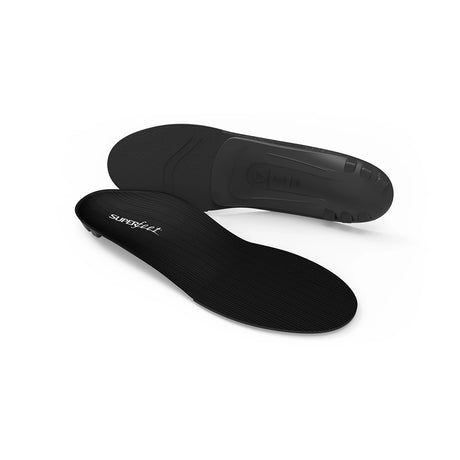
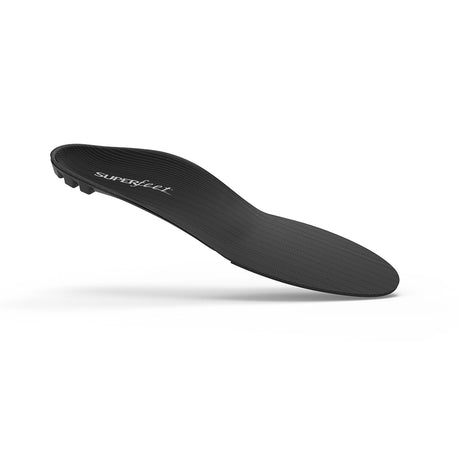
Superfeet Black All-Purpose Support Low Arch Insoles

Need help? Want a personalized recommendation?
Our team can help! Contact us or use our Insole Selector Quiz!
Standing is deceptively demanding on the foot. Walking distributes load across the foot as weight shifts through the walking stride, but prolonged standing concentrates that load statically, with the same pressure points bearing bodyweight continuously rather than intermittently. Over hours of standing, the foot's small muscles fatigue, the arch gradually flattens under sustained compression, and the plantar fascia and heel accumulate significant total stress. The result is the aching, burning, heavy-foot feeling that builds through a long shift on your feet. Hard floors, whether concrete, tile, or hardwood, compound this by providing no give or energy return, transmitting every pound of bodyweight directly through the foot with no absorption.
During prolonged standing, the arch bears a sustained static load rather than the dynamic, intermittent load of walking. Without external support, the arch's muscular and connective tissue support structures fatigue progressively, causing the arch to gradually flatten under continued compression. This accelerates fatigue and puts increasing strain on the plantar fascia and tendon that runs along the inside of the ankle as the shift progresses. A structured arch support offloads this sustained work, maintaining the arch's shape throughout the day and dramatically reducing the end-of-shift soreness that flat-arch fatigue produces.
Standing concentrates pressure across the entire bottom of the foot simultaneously, making full-footbed cushioning more important for standing than for any other activity. Rather than impact absorption, the primary function here is sustained pressure relief: reducing the continuous compressive load on the heel, arch, and ball of the foot over hours of static standing. A plush, full-contact footbed distributes this pressure more evenly and reduces the localized compression that causes the burning and aching pain of prolonged standing.
The heel absorbs a disproportionate share of bodyweight during standing, particularly for people who stand with their weight slightly back. Dedicated heel cushioning reduces the sustained pressure on the heel's fat pad, which compresses progressively under prolonged static load and loses its cushioning effectiveness over the course of a long shift. An insole that maintains consistent heel cushioning throughout the day provides relief that the foot's natural padding alone cannot sustain under hours of standing.
Some insoles designed for standing use materials with mild compliance, a slight give that gently activates the foot's muscles with subtle micro-movements rather than providing a completely rigid surface. This encourages minor circulation-promoting muscle activity that helps offset the circulatory stagnation that prolonged static standing causes. Anti-fatigue mats at workstations use the same principle, and insoles with similar material properties bring that benefit directly to the foot regardless of the floor surface.
The essentials: Full-footbed cushioning and arch support are the two most important features for standing insoles. Unlike activity-based insoles where impact shock is a primary concern, standing insoles need to manage sustained static pressure over many hours. Thick, plush cushioning that maintains its resilience throughout a long shift is worth prioritizing here more than in most other categories.
They're hard in different ways. Walking distributes load dynamically across the foot as weight shifts through the walking stride, and the foot's muscles stay active and engaged. Standing concentrates load statically with less muscular activation, which causes progressive fatigue in the arch's supporting structures and greater sustained pressure at fixed points. For the purposes of foot pain, prolonged standing is generally harder on the arch and heel than moderate-distance walking, which is why standing occupations are among the most common sources of chronic foot complaints.
Insoles used primarily for prolonged standing compress under sustained load more consistently than insoles used for walking or running, where the foot is in contact with the insole only intermittently. This continuous compression accelerates cushioning breakdown, and a standing insole may need replacement more frequently than activity-based insoles. As a general guide, insoles used for full shifts of standing should be replaced every six to twelve months, or sooner if they show visible compression or no longer provide the same cushioning feel they did when new.
Yes, where possible. Anti-fatigue mats and insoles address the same underlying problem from different angles: the mat reduces the hardness of the floor surface, while the insole provides cushioning and support at the foot itself. Together, they provide more complete relief than either alone. If your workplace allows anti-fatigue mats at your workstation, using both a mat and a quality insole will produce noticeably better end-of-shift comfort than either intervention on its own.
Our team is always happy to lend a hand! If you need any help at all, contact us! We can assist with answering product questions, making a product recommendation, helping to place your order, or providing any other assistance you may need.