The Retail Worker's Guide to Foot Pain: From Cashier to the Sales Floor
Not all retail jobs put the same kind of strain on your feet. A cashier standing at their register ringing up customers for an entire eight-hour shift and a stock...
Read moreWe're proud to be a top-rated store!



10 Seconds 3810 Ultra Arch Support Insoles


PowerStep Pinnacle Plus Met Insoles


Superfeet Green All-Purpose Support High Arch Insoles
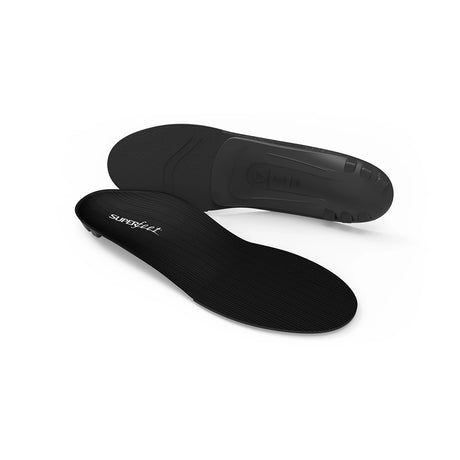
Superfeet Black All-Purpose Support Low Arch Insoles


PowerStep Pinnacle Maxx Support Insoles


PowerStep Pinnacle High Insoles


PowerStep Pinnacle Wide Fit Insoles


Superfeet Blue All-Purpose Support Medium Arch Insoles


Powerstep Pinnacle Low Insoles


Superfeet Everyday Casual Support Insoles


Superfeet Work Cushion Insoles


PowerStep Pinnacle 3/4-Length Insoles

Need help? Want a personalized recommendation?
Our team can help! Contact us or use our Insole Selector Quiz!
Retail is demanding work for the feet. Whether the position is cashier, sales associate, stocker, or manager, most retail roles involve spending the majority of a shift on your feet, alternating between sustained standing and active walking, on hard tile or concrete floors, often in footwear chosen for appearance or dress code compliance rather than support. The combination of high step counts, prolonged standing periods, and hard surfaces without adequate footwear support is the most common driver of foot fatigue and pain in retail workers. The nature of the job offers few opportunities to sit, and the end-of-shift foot and leg fatigue that most retail workers experience is both common and directly addressable with appropriate insole support.
Retail shifts combine significant walking, particularly for stockers, sales associates, and managers who move throughout the store, with periods of sustained standing at registers, counters, and service desks. Both activities load the arch continuously, and without adequate support the arch fatigues progressively through the shift. A structured arch support offloads the muscular work the arch performs across both the walking and standing portions of the day, maintaining comfort and reducing the end-of-shift aching that inadequate arch support causes.
Retail floors are almost invariably hard tile or polished concrete, providing no cushioning from below. An insole with consistent full-footbed cushioning reduces the pressure load across all contact points, making the difference between uncomfortable and tolerable over a full shift. This is particularly important for sustained standing periods, where the same pressure points bear continuous load without the distribution relief that walking provides.
Standing at a register or service counter concentrates static load on the heel over extended periods. Dedicated heel cushioning protects the heel's fat pad from this sustained compression and reduces the heel pain that builds up during prolonged stationary positions within a shift.
Retail dress codes vary from casual sneakers to business casual footwear, and the right insole needs to work across whatever footwear the position requires. A medium-profile full-length insole suits most retail footwear, while a thin or 3/4-length design handles business casual and lower-volume shoes. The ability to use the same insole across different footwear choices reduces the need to manage multiple insoles for different shifts.
The essentials: Arch support and full-footbed cushioning are the core features for retail work insoles, addressing the mixed standing and walking demands of a retail shift on hard floors. A semi-rigid insole with moderate cushioning and a medium thickness is the most broadly appropriate starting point for most retail roles and footwear types.
The core features are the same, but the balance shifts slightly by role. Cashiers spend more time in sustained standing positions, making cushioning and static pressure relief the priority. Sales associates and stockers cover more ground and accumulate higher step counts, making arch support and heel cushioning more central. For roles that involve both, a semi-rigid insole with moderate cushioning handles both adequately. If standing at a fixed position is the dominant activity, a slightly thicker, more cushioned insole is worth prioritizing.
Generally yes, if the shoes are similar in volume and profile. Full-length insoles trimmed to the correct size work across most sneakers and casual shoes with removable factory insoles. If your retail footwear varies significantly between shifts, purchasing a second pair of the same insole is more practical than moving one pair between shoes daily, as the transfer process can distort the insole over time and reduces its useful lifespan.
Our team is always happy to lend a hand! If you need any help at all, contact us! We can assist with answering product questions, making a product recommendation, helping to place your order, or providing any other assistance you may need.