Why Do My Feet Hurt at the End of the Day?
By the time you finally kick off your shoes at night, your feet can feel like they've run a marathon, even if you spent the day behind a desk or...
Read moreWe're proud to be a top-rated store!



10 Seconds 3810 Ultra Arch Support Insoles


PowerStep Pinnacle Plus Met Insoles


PowerStep Pinnacle Maxx Support Insoles


Superfeet Green All-Purpose Support High Arch Insoles


Superfeet Blue All-Purpose Support Medium Arch Insoles


PowerStep Pinnacle High Insoles
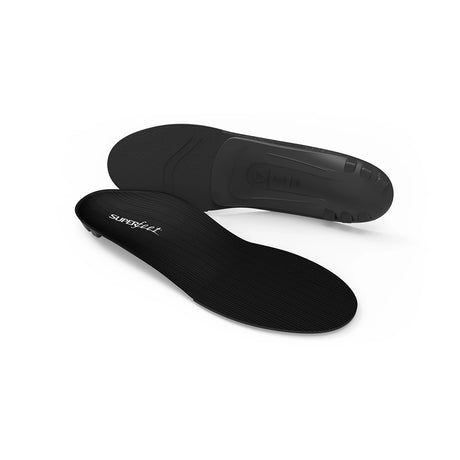
Superfeet Black All-Purpose Support Low Arch Insoles


Powerstep Pinnacle Low Insoles


Superfeet Everyday Casual Support Insoles


PowerStep Pinnacle Wide Fit Insoles


Superfeet Work Cushion Insoles


Superfeet Copper All-Purpose Memory Foam Support Insoles

Need help? Want a personalized recommendation?
Our team can help! Contact us or use our Insole Selector Quiz!
Teaching is physically more demanding on the feet than most people outside the profession appreciate. A typical school day involves extended periods of standing at the board or in the classroom, punctuated by continuous movement between desks, hallways, lunchrooms, and outdoor spaces. Most school and classroom floors are hard tile that provides no give underfoot. The average teacher may stand or walk for six or more hours of an eight-hour workday, with limited opportunity to sit during instructional time. The foot and lower back fatigue that many teachers develop is a direct consequence of this sustained demand in footwear and on surfaces that weren't chosen with foot health in mind.
A school day involves enough standing and walking to produce progressive arch fatigue, particularly in the afternoon hours when teachers have already been on their feet for several hours. A structured arch support maintains the foot's alignment and reduces the muscular work the arch performs throughout the day, providing a more consistent energy foundation from first period to last. For teachers who experience foot pain primarily in the afternoon, arch support is typically the most effective intervention.
Classroom and hallway tile floors are among the harder surfaces any professional spends sustained time on. An insole with full-footbed cushioning reduces the sustained pressure load on the foot across the school day, making the difference between acceptable and genuinely comfortable over a full day of instruction. This is particularly relevant during the static standing that chalk-and-talk instruction and grading at standing desks requires.
Extended standing in classrooms concentrates pressure on the heel as posture shifts over time. Dedicated heel cushioning protects against this sustained heel compression and reduces the heel pain and lower back fatigue that teachers commonly report, particularly on days with more standing instruction or extended recess and outdoor duty.
Teachers wear a broad range of footwear, from casual sneakers to business casual shoes, and may change footwear between indoor and outdoor duties. An insole that works across this range maintains consistent support regardless of what the day requires. Thin and 3/4-length options accommodate the business casual footwear that many dress codes require, while full-length medium designs work well in sneakers and casual everyday shoes.
The essentials: Arch support and full-footbed cushioning are the core features for teaching insoles, addressing the combination of sustained walking and standing on hard tile floors that defines the physical demands of the role. An insole that provides both in a versatile profile compatible with the range of footwear teachers wear is the most practical and impactful choice.
Static standing concentrates pressure at fixed points on the foot without the load-distributing relief of the walking walking stride. On days with more standing instruction, the same areas of the foot, particularly the heel and ball of the foot, bear sustained pressure for extended periods. Movement-based days, with more circulation between tables and student interaction, distribute this load more dynamically and reduce the localized pressure buildup. The answer to this pattern is an insole that provides better static pressure relief, specifically plush full-footbed cushioning alongside arch support.
Yes, ideally. The foot doesn't get a meaningful recovery opportunity during a brief footwear change between indoor and outdoor duty, and inadequate support in either context contributes to the cumulative foot load of the day. If your outdoor duty shoes are different from your classroom shoes, using a matching insole in both maintains consistent support across the full school day rather than alternating between supported and unsupported footwear within the same shift.
Our team is always happy to lend a hand! If you need any help at all, contact us! We can assist with answering product questions, making a product recommendation, helping to place your order, or providing any other assistance you may need.
There don't appear to be any related articles at the moment, but we update our blog with new content regularly. In the meantime, check out these recent posts!