Why Do My Feet Hurt at the End of the Day?
By the time you finally kick off your shoes at night, your feet can feel like they've run a marathon, even if you spent the day behind a desk or...
Read moreWe're proud to be a top-rated store!



Superfeet Copper All-Purpose Memory Foam Support Insoles


Superfeet Everyday Casual Support Insoles


PowerStep Pinnacle 3/4-Length Insoles


PowerStep Original Orthotic Insoles


Superfeet Hike Cushion Insoles
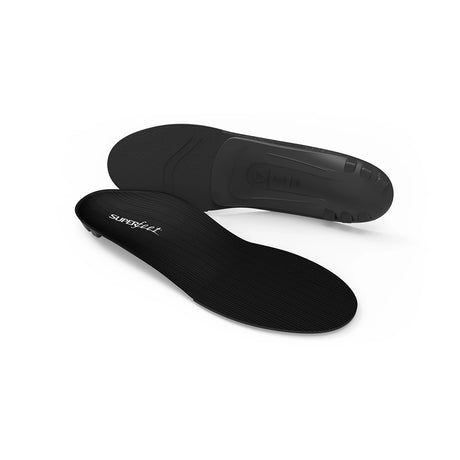
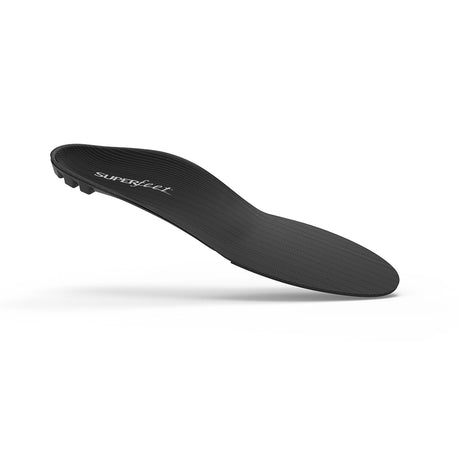
Superfeet Black All-Purpose Support Low Arch Insoles


Superfeet Sport Ultralight Insole


Superfeet Everyday Casual Pain Relief Insoles


New Balance Flex Cushion Insoles


New Balance Metatarsal Support Insoles


New Balance Active Cushion Insoles


Superfeet Winter Support Insoles


New Balance Slim-Fit Arch Support Insoles


Birkenstock Sport Blue Footbed Arch Support Insoles
Arch support is the most fundamental function of an insole and the feature most directly responsible for the pain relief, alignment correction, and fatigue reduction that insoles provide. The arch of the foot isn't a passive structure: it actively absorbs shock, distributes load, and propels the body forward with every step. When it lacks adequate support from the shoe, it compensates by working harder, which leads to plantar fascia strain, arch fatigue, and the cascade of misalignment that can affect the ankle, knee, hip, and lower back over time. Arch support insoles supply the structural foundation from below that the foot's own structures need to function without overload.
An arch support insole spreads bodyweight more evenly across the entire bottom of the foot rather than concentrating it at the heel and ball of the foot. This pressure distribution reduces the peak load at any single point, protecting the plantar fascia, the heel, and the metatarsal heads from the localized stress that causes the most common foot pain conditions. For people with flat feet or overpronation, this redistribution corrects the forward and inward load shift that the collapsed arch creates.
The foot's alignment affects the entire chain of joints up the leg above it. Overpronation caused by insufficient arch support sends rotational stress up through the ankle, shin, knee, and hip with every step. A structured arch support that maintains neutral foot alignment reduces this rotational stress at the source, which is why arch support insoles are often prescribed for knee pain, shin splints, and IT band syndrome as well as foot pain. Getting the foot's alignment right reduces the compensatory stress that every structure above it would otherwise absorb.
The small muscles of the arch perform continuous work during standing and walking. Without external support, they fatigue progressively over the course of a day, producing the aching, heavy-foot feeling that builds through extended wear of unsupportive footwear. An arch support insole offloads a portion of this muscular work, allowing the foot to sustain its natural function for longer before reaching the fatigue threshold.
A properly supported arch functions as the foot's primary shock absorber, flexing slightly on impact and rebounding to propel the foot forward. When the arch collapses under load without support, this shock-absorbing spring function is lost, and more impact is transmitted directly to the heel, lower leg, and knee. Arch support restores this spring function, protecting the musculoskeletal system from the total impact that a poorly supported arch fails to dissipate.
The most common indicators are arch pain or fatigue that builds through the day, heel pain that's worst in the morning, foot fatigue that limits how long you can stand or walk comfortably, and a pattern of wear on the inner edge of your shoes. Low arch height, confirmed by a wet foot test where your footprint shows little or no arch curve, is a strong predictor of the alignment issues that arch support addresses. If you experience any of these symptoms in footwear without arch support, adding arch support insoles is a reasonable first step.
Yes. An arch support that's too high for the individual foot creates pressure at the peak of the arch rather than distributing load. This causes discomfort under the arch rather than supporting it, and can be mistaken for the wrong insole type when it's actually the wrong arch height. Arch height should match the natural resting height of the foot: low-arch insoles for flat or low-arched feet, medium-arch for neutral feet, and high-arch for high-arched feet. Using a high-arch insole with a flat foot is a common fitting mistake that produces arch pressure rather than arch support.
Yes, typically. If you're moving from unsupported footwear to a structured arch support, the foot's small muscles need time to adapt to working alongside external support rather than against it. Starting with a few hours of wear per day and building up over one to two weeks reduces the initial discomfort that some people experience when their foot first encounters a supportive arch. Most people reach full comfort within two weeks of consistent wear.
Our team is always happy to lend a hand! If you need any help at all, contact us! We can assist with answering product questions, making a product recommendation, helping to place your order, or providing any other assistance you may need.
There don't appear to be any related articles at the moment, but we update our blog with new content regularly. In the meantime, check out these recent posts!