What Is Wear-Molding? How Your Insoles Adapt to Your Feet Over Time
If your new insoles felt a little different on day one than they do now, that's not your imagination — it's wear-molding, a process that happens to every insole you...
Read moreWe're proud to be a top-rated store!

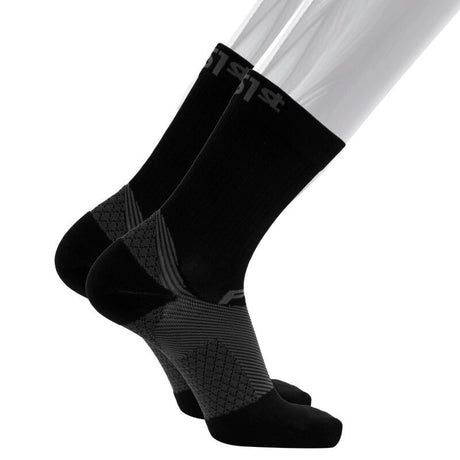

OS1st FS4 Plantar Fasciitis Crew Socks
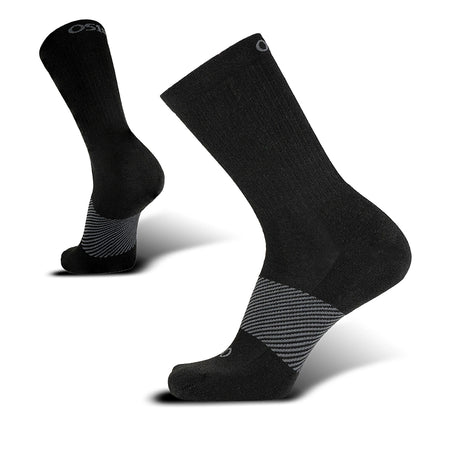

OS1st Wicked Comfort Performance Crew Socks
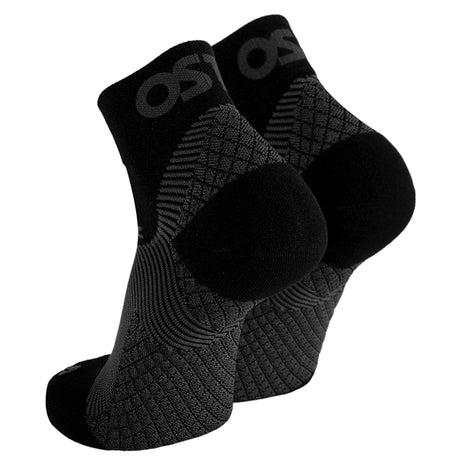
OS1st FS4 1/4 Crew Plantar Fasciitis Socks


Spenco Total Support Gel Insoles


Spenco Polysorb Cross Trainer Insoles


Sof Sole Airr Performance Insoles


Sof Sole Athlete Performance Insoles


FORM Memory Foam Cushioned Insoles


Sof Sole Athletic + Arch Performance Insoles


Sof Sole Work Performance Insoles


Sof Sole Arch Performance Insoles


Spenco Polysorb Walker Runner Insoles


Sof Sole 3/4-Length Gel Arch W/ Memory Foam Insoles


Hiking places a distinctive set of demands on the foot that differ meaningfully from road running or everyday walking. Uneven terrain requires the foot to constantly adapt to angled, unstable surfaces, placing varied lateral and twisting stress on the arch, ankle, and joints above. Elevation changes, particularly descents, generate significant braking forces through the forefoot and toes as the body resists downhill momentum. Pack weight multiplies all of these loads, increasing the effective bodyweight the foot must support and absorb with every step. Over a long day on the trail, these demands accumulate into the arch fatigue, heel pain, and blister-prone hot spots that are among the most common hiking complaints. Most hiking boots provide substantial ankle and twisting support, but the factory insoles inside them are typically thin and minimally cushioned.
Hiking's uneven terrain continuously loads the arch from varying angles, and without adequate support the arch fatigues progressively over a long day. A structured arch support maintains the foot's alignment across these variable surface conditions, reducing the total strain on the plantar fascia and arch musculature. For multi-day hiking, consistent arch support prevents the arch fatigue that builds over successive days from becoming a limiting factor.
Descents concentrate significant braking force at the heel as the body slows against downhill momentum. Without adequate heel cushioning, this repeated impact during descents causes heel pain and fatigue that can persist long after the hike ends. A deep heel cup combined with cushioning materials in the heel zone absorbs this braking impact and keeps the foot's fat pad centered beneath the heel bone, where it provides maximum natural cushioning.
Rocky and rooted terrain creates constant lateral and twisting challenges that require the foot to stabilize against rolling or twisting. A rigid or semi-rigid insole with a firm midfoot provides twisting resistance, reducing the degree to which the foot can twist or collapse laterally when stepping on an angled rock or root. This twisting support works alongside the boot's shank to reduce ankle sprain risk and foot fatigue from constant micro-stabilization on uneven ground.
Long hikes generate significant foot sweat, and damp insoles accelerate blister formation by softening the skin and increasing friction. An insole with a moisture-wicking top cover keeps the foot drier throughout the hike, reducing the friction that causes hot spots. For multi-day hikes, moisture management becomes increasingly important as the foot's skin tolerates less friction after repeated wetting and drying cycles.
The essentials: Arch support and heel cushioning are the core features for hiking insoles, addressing the two most common causes of hiking-related foot pain. Torsional stability is an important secondary feature for technical terrain, and moisture management becomes progressively more important for longer and multi-day outings.
The core features are the same, but multi-day hiking warrants prioritizing durability and moisture management more heavily. An insole that compresses significantly over a full day may recover overnight during a day hike, but on a multi-day trip it may not fully recover between daily use. Insoles with durable foam compounds and moisture-wicking top covers hold up better over consecutive days. A thicker cushioning profile is also more appropriate for backpacking with heavy pack weight, which multiplies the load on the foot with every step.
Generally yes, with the usual volume caveat. Most hiking boots have substantial internal volume and accommodate medium-thickness insoles comfortably. Trail runners vary more; some have enough volume for a medium insole while others are better suited to a thin profile. Remove the factory insole and compare thickness before purchasing. A 3/4-length insole is a practical option for trail runners with limited volume, providing arch support and heel cushioning without affecting the forefoot fit.
Our team is always happy to lend a hand! If you need any help at all, contact us! We can assist with answering product questions, making a product recommendation, helping to place your order, or providing any other assistance you may need.
There don't appear to be any related articles at the moment, but we update our blog with new content regularly. In the meantime, check out these recent posts!