Free domestic shipping on all orders $29.99 & up

The Insole Store now accepts HSA/FSA payments. Learn more

Rewards members save on every purchase. Join for free today!

BOGO15DEAL

Arch Support Insoles

You're currently browsing our entire selection of arch support insoles. Use the product filters below to narrow your selection, try our Insole Finder for a quick recommendation, or contact us if you have any questions.


Top Recommended Arch Support Insoles

PowerStep Pinnacle Insoles

Description:
Overview The PowerStep Pinnacle insole is perhaps the most popular arch support insole available today, and in many ways this insole is the "quintessential" arch support insole due to its excellent combination of features. This insole will provide you with semi-rigid arch support, allowing the fo... Read more

Superfeet Copper All-Purpose Memory Foam Support Insoles

Description:
Overview The Superfeet Copper All-Purpose Memory Foam Support Insoles are feature firm arch and heel support combined with a layer of memory foam cushioning throughout the insole to help provide added pressure relief and shock absorption beyond what the traditional EVA foam cushioning will provid... Read more

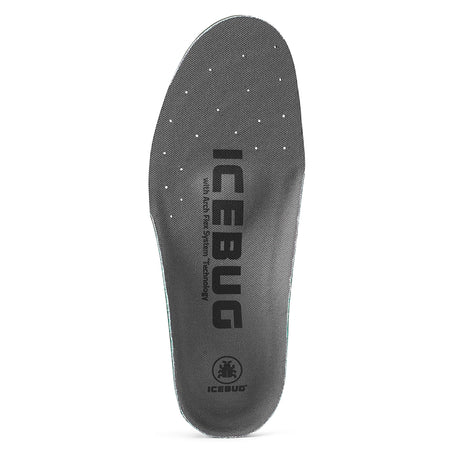
Icebug Comfort Insoles

Description:
Product Details Overview: The Icebug Comfort Insoles are a full-length, semi-rigid orthotic arch support insole that is designed specifically for medium and high arch heights. They are now made with a lower carbon footprint-- using of 82% recycled PU foam and 20% bio-based EVA foams. The Comfort ... Read more

New Balance Slim-Fit Arch Support Insoles

Description:
Product Details Overview: The New Balance Slim-Fit Arch Support Insoles are a rigid orthotic arch support insole for those who want long-lasting support but slim enough to fit low-profile shoes. These insoles deliver underfoot stability and versatile comfort for all day wear. Product Features: R... Read more

Shop All Arch Support Insoles


About Arch Support Insoles

What do arch support insoles do?

Arch support insoles serve a few key purposes, all of which help to keep your feet healthy and pain-free.

  1. The arch support itself helps to distribute weight and pressure more evenly across the foot (not only front-to-back, but also side-to-side). If you’ve stood for long periods of time without an arch support in your shoes, you’ve probably felt the arches of your feet get tired and sore. This is because all of the pressure is being directed into the arch of the foot, which bears the entirety of that pressure; an arch support will help distribute that pressure more evenly.
  2. The arch support will also help to prevent excess strain on the arch of the foot. Especially under more demanding circumstances (sports, heavy duty work, even standing for long periods), the muscles in the arch of the foot will begin to sustain injury (even if you don’t feel it at the time). Over time, these repeated, small injuries can start to become a painful issue, leading to problems such as plantar fasciitis. An arch support will help reinforce the arch of the foot to help alleviate some of this strain.
  3. When paired with a heel cradle or heel cup (which most arch support insoles have), the arch of the insole will also help to “guide” the foot in making a normal, neutral movement during each step you take. This alleviates excess strain on the ankle due to inwards/outwards over-rotation (over-pronation and supination, respectively). In essence, your foot will follow the contour of the arch support as you step, creating a natural motion for the foot.

Who benefits from using arch supports?

Everyone — regardless of age, occupation, activity level, foot pain, etc. — will benefit from the usage of arch supports in their shoes. Regardless of what your day-to-day looks like, any time that you spend standing or walking puts strain on your feet. Without proper support, this strain will continue to go unalleviated, which will ultimately lead to foot discomfort over time. Arch supports ensure that your foot receives proper support from heel to toe, preventing both common conditions such as foot fatigue while also helping to prevent more serious conditions such as plantar fasciitis.

For those who already suffer from foot conditions — whether pain-oriented like plantar fasciitis or heel spurs, or alignment-oriented like over-pronation or supination — arch supports can help alleviate these symptoms. This happens simply by ensuring that the foot remains supported, which 1) ensures that the issues which caused the foot condition in the first place are mitigated, allowing the foot to begin healing, and 2) guides the foot in a proper motion to promote proper support and alignment.

So, while arch supports can be used as a curative measure for existing foot conditions and alignment issues, they are often better used as a preventative measure to ensure proper foot support for better foot health and foot comfort.

What are the differences between arch supports?

The major features that you'll find on every arch support insole are the following:

  • The arch support
  • The heel cup/heel cradle
  • The cushioning
  • The top-cover material

The arch support is what physically supports the middle of your foot (where your foot arch is) and helps distribute pressure more evenly across the foot. Arch supports differ in terms of both rigidity (we group them into three categories: rigid for maximum support, flexible for maximum flexibility, and semi-rigid for somewhere in-between) and arch height (see our Insole Guide for more info on rigidity and arch height). The correct combination for you depends on a mixture of your foot shape, preferences, and your reason for purchasing an arch support.

The heel cup (also called a heel cradle) is what supports the heel of the foot and works in combination with the arch support to alleviate strain on the base of the foot arch where the plantar fascia tendon connects to the heel. There's not a lot of differences between heel cups except for depth and shape, which largely varies across brands and is more of a preference consideration rather than a functionality consideration.

Every arch support insole has cushioning, which helps improve foot feel and will provide foot support or pressure relief, depending on the specific materials used. This varies in terms of volume (thicker arch supports provide more cushioning and support at the expense of taking up more room in your shoes), density (firmer cushioning will provide more overall support but may feel stiff under your feet), and material (with EVA foam, memory foam, gel, and cork being the primary materials used).

The top-cover is the material that is placed along the top of the insole to separate the foot from the insole's "innards." This is typically either fabric or leather, with fabric being a very cost-effective and durable material while leather is a premium material that some believe lasts longer and feels nicer.

Outside of these four factors, major differences include whether or not the arch support has a built-in metatarsal support, whether the insole has additional cushioning features such as heel and/or ball-of-foot strike padding (ideal for shock absorption during high-impact activities), and the shoe size/width the insole is designed for. Aside from sizing, strike padding and metatarsal support are optional features that depend entirely on your preference and needs.

Lastly, every manufacturer has a slightly different approach to how an arch support insole should be made, leading to slight overall design differences from one brand to another. Two insoles from different brands that have the same features (for example: two semi-rigid arch supports for medium arches, with medium volume and density EVA foam for cushioning) will still feel slightly different when worn. However, this is entirely a personal preference consideration and is largely determined through long-time usage of arch supports.

What are rigid, semi-rigid, and flexible supports? Which do I need?

An arch support can be either completely rigid (extremely difficult to flex), completely flexible (easy to flex such that the insole can be bent over itself), or somewhere in-between. We classify these different types of arch supports as “rigid,” “semi-rigid,” and “flexible” (previously “cushioned”) respectively.

As for which you need, it’s largely a matter of how much support you want, with a lot of the decision up to personal preference. However, in general:

  • A semi-rigid arch support is the best for most people and most uses. It provides firm enough support for the arch of the foot in order to be effective at reinforcing the foot arch, distributing pressure across the insole, and controlling foot motion. However, it’s also flexible enough to bend with the foot as you move, such as during running, jumping, or even just walking. This is the arch support type that we recommend for most people, especially those who are wearing an arch support insole for the first time.
  • A rigid arch support will provide your foot with the absolute maximum support. Remember: A rigid arch support will barely flex at all, even under extreme pressure. For those who have worn custom orthotics from a podiatrist, rigid arch support insoles offer a similar level of support. We typically don’t recommend rigid arch supports for first-time arch support users unless you’re absolutely certain that what you want or need is maximum, extra-firm support.
  • A flexible arch support will provide the most in terms of cushioning for the arch of the foot without very much in the way of firm support (we used to call these “cushioned supports” because of this). However, without firm support, the arch support itself will be much less effective in terms of reinforcing the foot arch and distributing pressure effectively. A flexible arch works well to alleviate some pressure on the foot while focusing primarily on cushioning over support. This is best for those sensitive to having firm support under the arch of their foot.

What are high, medium, and low arches? Which do I need?

Everyone’s foot is shaped differently, but we generally classify people as having either a “high” natural foot arch, a “medium” (or “neutral”) natural foot arch, or a “low” natural foot arch. This is simply a measurement of how much of the midfoot makes contact with the ground during normal standing or walking, but it does tell us what types of insoles would work best for your feet.

There’s a simple way to determine your foot arch at home, called the “wet foot test.” All you do is get your foot wet, step on a flat surface where you’ll be able to see your footprint, and then compare the footprint shape with the chart below. Whichever shape most closely matches your own footprint is the arch height you naturally have (the more your midfoot contacts the ground, the lower your arches).

We typically say that low arches range anywhere from 15mm to 21mm in height, medium arches 22-28mm, and high arches 29mm to 35mm. The exact measurement isn’t necessary for your foot, however.

To achieve the ideal support, you’d want an arch support insole that closely matches your own arch height. If you have low arches and buy a high-arched insole, the arch support might be pretty uncomfortable. And if you have high arches and buy a low-arched insole, the arch support might not provide enough support to be effective. Medium arch insoles work well for almost anyone, but low arch insoles would be best for low-arched feet, while high arch insoles would be best for high-arched feet.

Compare /4

Loading...